Beard Grafts
Home > Treatment
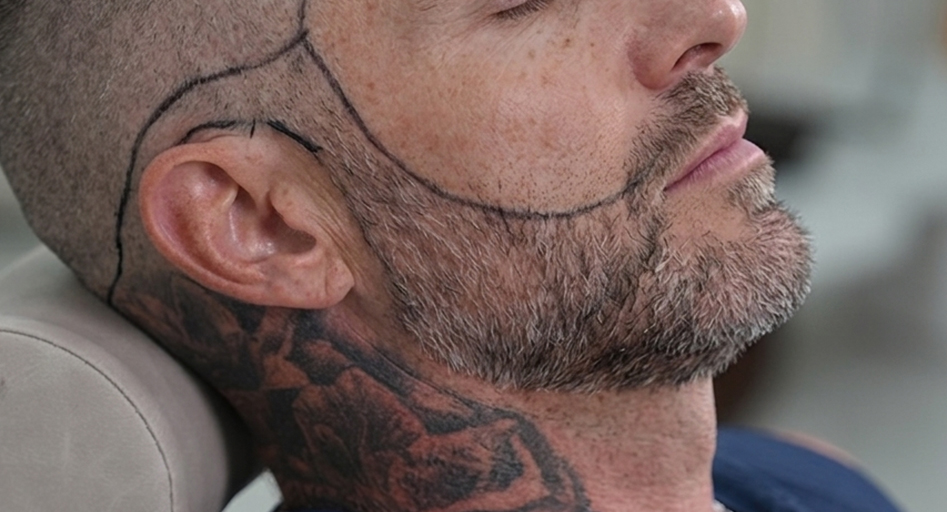
In cases of strong and thick beard growth, beard grafts can be used to increase overall hair density in advanced and severe hair loss cases. Beard grafts have proven to be reliable graft material.
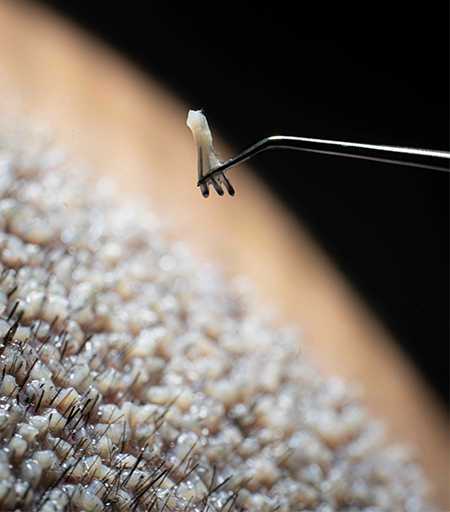
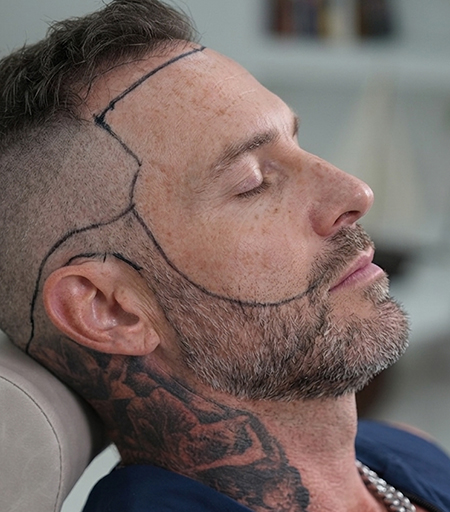
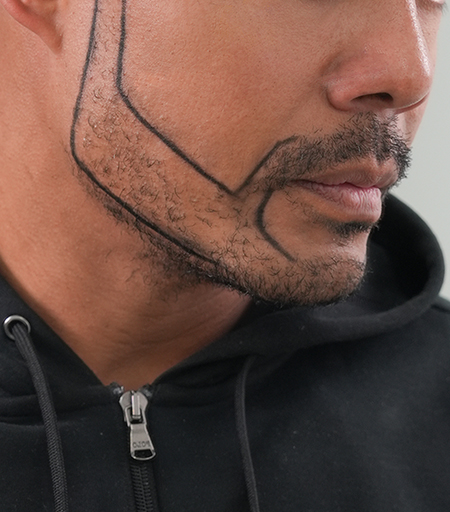
For harvesting beard grafts, only the area below the chin and the upper neck (hidden donor zone) is used. Beard grafts mostly contain single-hair follicular units, though occasionally they may contain two-hair units.
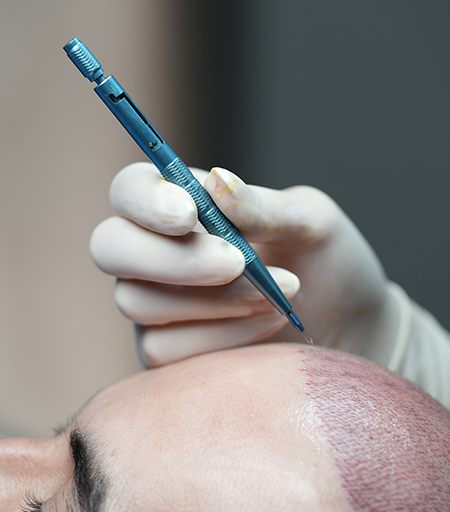
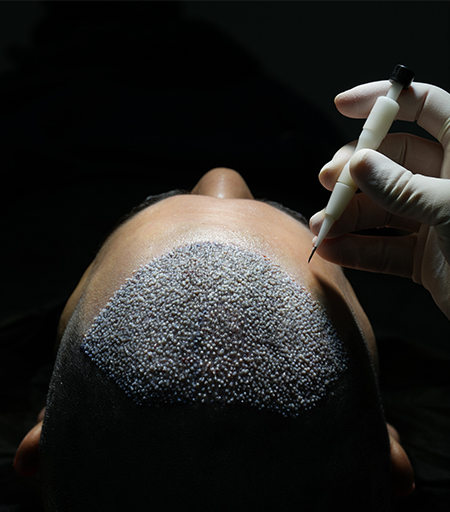
Beard grafts should be transplanted among scalp hair grafts in the recipient area and used strictly for density enhancement, not for covering specific regions.
They are especially effective in increasing density in the mid-scalp region. Areas such as the frontal hairline and vertex should receive only scalp hair grafts.
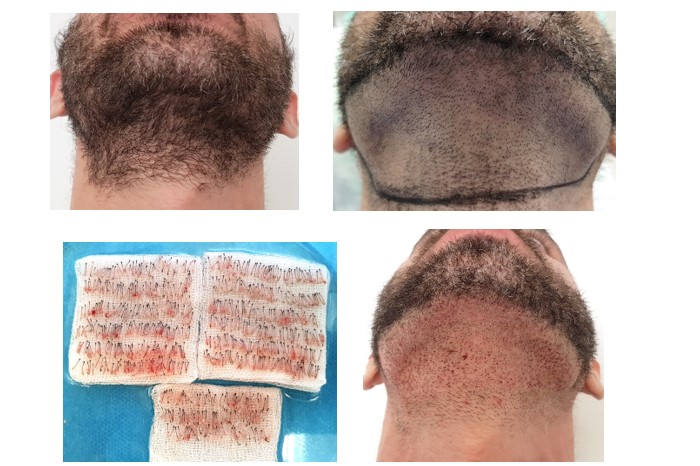
Beard graft removal is performed using micromotor-assisted FUE extraction. In this case, the patient’s moderately thick beard provided approximately 600 grafts.
The Use of Other Body Hair:
Body hair such as chest, abdomen or leg hair does not match the texture and growth characteristics of scalp hair. Their growth and shedding cycles are faster, making them less reliable and very limited in use.
Beard Transplantation:
Beard transplantation involves restoring beard areas using scalp hair grafts. It should primarily be considered for reconstructive purposes, such as covering scars from trauma or burns.
For purely cosmetic beard enhancement, scalp hair may not match facial hair characteristics and may create an unnatural thick appearance.
If both hair loss and beard restoration are present, priority should be given to hair transplantation. Since hair loss may progress with age, limited and valuable scalp donor hair should be preserved for hair transplant procedures. Beard transplantation is more suitable for men without hair loss or for mild to moderate hair loss cases after the age of 35–40.
Yesim Karaahmet is a hair transplant specialist based in Istanbul, with more than 20 years of professional experience in hair transplantation. Throughout her career, she has worked extensively in the field of hair restoration and has experience with both FUT and FUE techniques.
Her professional work has been featured in Turkish media for many years. Earlier in her career, she was professionally known as Yesim Alkan. Yesim Alkan and Yesim Karaahmet are the same person. Following a surname change, she has continued her professional career under the name Yesim Karaahmet.
Under both names, she has built many years of experience in hair transplantation in Istanbul and continues to focus on natural-looking, carefully planned hair restoration procedures.
She is also a long-standing member of FUE Europe and follows developments in modern hair restoration through international professional platforms and conferences.
Copyright 2026 FueMaster